
The Market Is Rewriting Terminal Value
Software sell-offs reflect a fundamental shift in terminal assumptions in the age of AI.

My apologies for the lack of updates recently. Between a youth baseball tournament, Easter, end of quarter tasks, and taking my University of Dayton students on a two-day trip to Chicago, it’s been an exceptionally busy period.
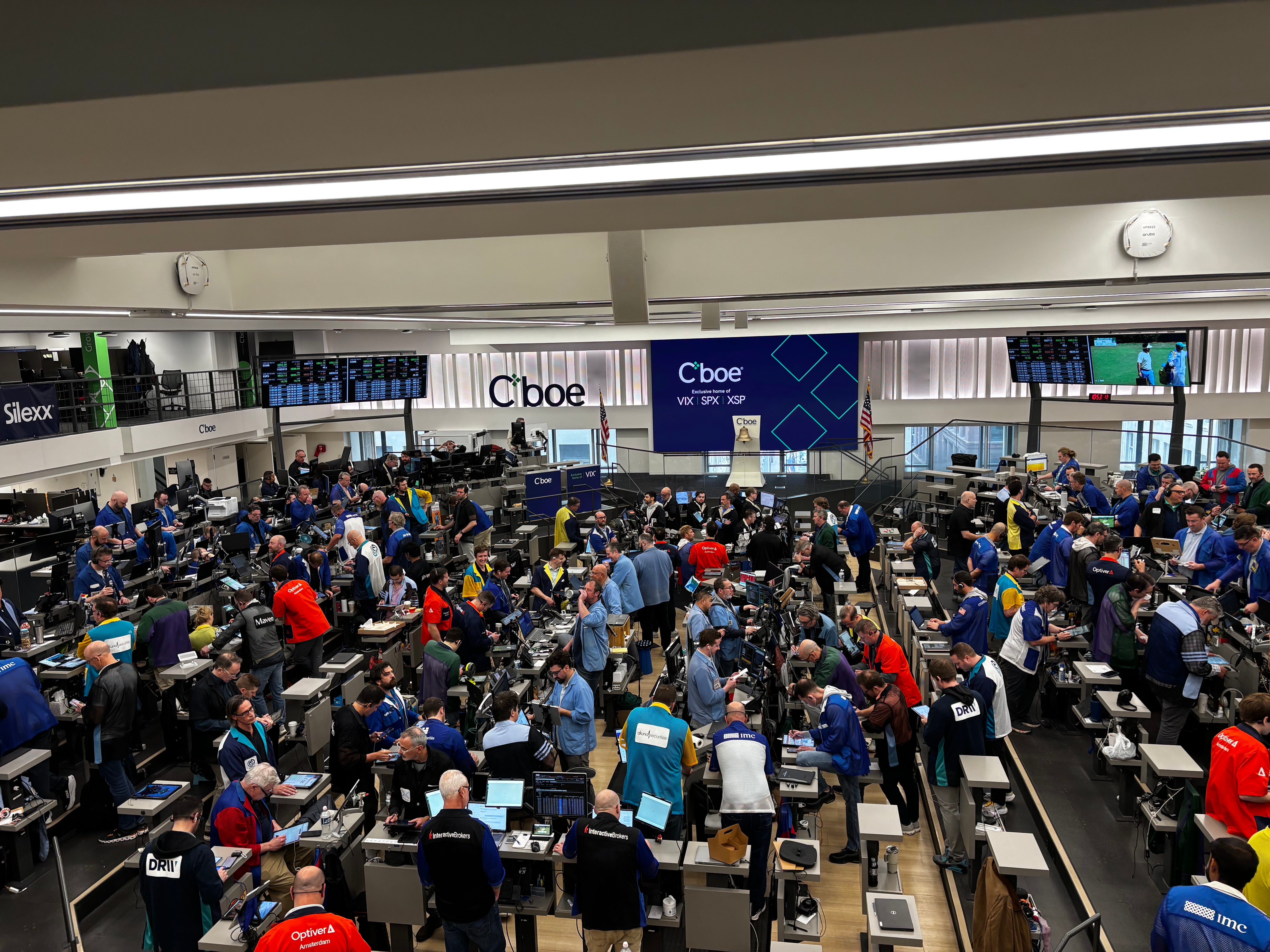
On our trip, the students met with Morningstar, William Blair, Goldman Sachs, and got a tour of the CBOE pits. It was a great trip and it was fun to see the finance world from the perspective of a new hire again. For my money, when the weather is nice, Chicago is the best city in the country and we had two days of good weather.
The Market Is Rewriting Terminal Value
The continued rounds of recent software sell-offs have reminded me that we should always be thinking about terminal value. Stocks may trade on quarterly results or even management guidance updates, but big stock moves (+/- 10% on the day) are an implicit recalibration of terminal assumptions for growth, profitability, and risk.
Consider a simple example with the following parameters:
Starting FCF: $100
Explicit five-year FCF growth: 10%
Terminal growth rate: 3%
Discount rate: 9%

Here, our terminal estimates account for 78% of our ultimate valuation.
This percentage will vary by situation. The higher the discount rate, for example, the less valuable terminal value becomes, similar to how a bond’s duration decreases as interest rates increase.
Even if we use a 15% discount rate in the above example, the terminal value still accounts for 61% of our valuation.

In other words, only ~20–40% of what you’re paying for is tied to the next five years. The rest depends on what happens after.
If we believe that the market price represents an implied forecast of future cash flows discounted back to the present, then we can reasonably conclude that big price swings include new assumptions about terminal value given its weight in the present value calculation.
The ongoing sell-off in software (the “SaaS-pocalypse”), then, isn’t the market saying, “We’re worried about 2027 numbers,” as much as it is saying, “We are worried about what this company’s reality looks like in 2030 and beyond.”
No one has a crystal ball, of course, but if you’re going to step into software right now, you need to consider what the current market price is suggesting about terminal value and determine if you agree or disagree with those numbers.
Qualitative assessments help with this exercise. Here are a few questions to consider:
Do I think the company’s products and services will be at least as relevant a decade from now as they are today?
Is the company’s corporate culture and management style amenable to long-term value creation?
Is the company’s economic moat wide enough to give management time to respond to new challenges and opportunities?
All this is to say that it’s dangerous to jump into the SaaS-pocalypse if you’re thinking about short-term results and hoping the company beats next quarter’s earnings. For any of these companies to have a material turnaround, they will need to show investors that they stand a chance in the new AI world over the next 5, 10+ years.
Even if you have conviction in your long-term view on a particular software company today, it’s going to be an uncomfortable buy. And it should be. The distribution of terminal outcomes in software continues to be remolded by AI.
It’s true that great investments rarely begin without discomfort, but discomfort alone is not a thesis. It needs to be paired with your own vision for what the business can become, and a willingness to revisit that view as the landscape evolves.
Stay patient, stay focused.
Todd
Todd Wenning is the President & CIO of KNA Capital Management, LLC, an Ohio-registered investment advisor that manages a concentrated equity strategy and provides other investment-related services.
At the time of publication, the author, his immediate family, and/or KNA Capital Management, LLC or its clients own shares of Morningstar.
Please see important disclaimers.
Okay, but for CSU, when they make an investment, terminal value isn't a huge factor because they use a 20% hurdle rate. How can you go backwards and know what the market is indeed not pricing a terminal value? I hope this makes sense.
Use this Discount methodology:
https://substack.com/@absolutetotalcompound/note/c-243608858?r=5g11d4