
3 Investing Book Recommendations
Three investing books that made me think this year

Gift giving has become more challenging over the past decade. We once gifted CDs and DVDs - I’m dating myself here - but now most of those things are digital and part of one of our streaming services.
Books, however, remain great gifts for the curious mind.
If you’re looking for an investing book for someone on your holiday shopping list, here are three of my favorite books from the past year.
Ergodicity - Luca Dellanna
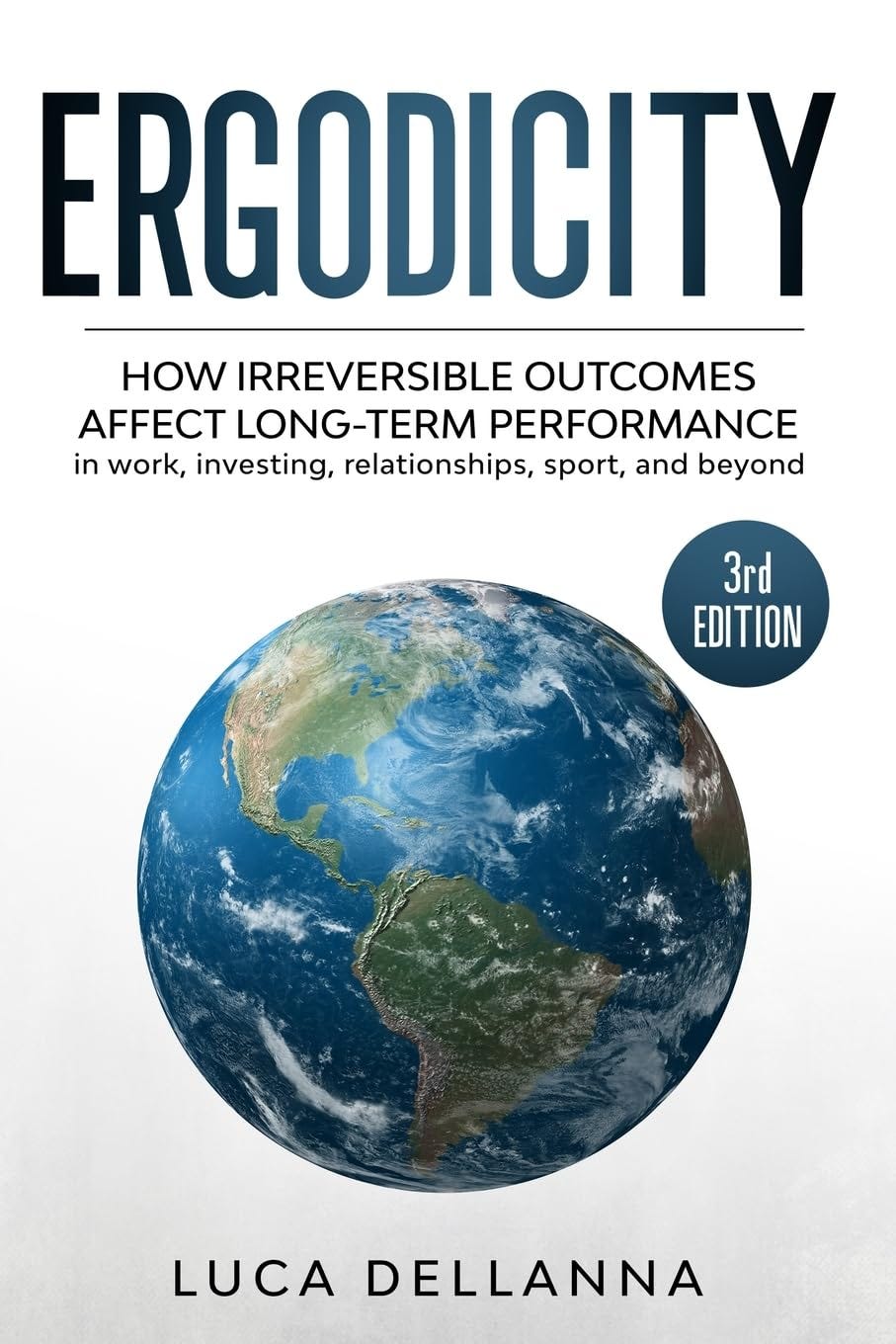
I had listened to Luca Dellanna on the Value: After Hours podcast and was intrigued by the concept of ergodicity and how to apply it to life and investing.
In an ergodic system, a single participant’s long-term average outcome will eventually converge with the average outcome of all participants in the system right now. If you and I, for example, flip a true coin 1,000 times, both of our results will eventually converge to display the probability of heads and tails (50% for both).
In a non-ergodic system, there are “point of no return” outcomes that disrupt the convergence of the expected probabilities. For example, imagine we are flipping coins where the game is over if we lose five flips in a row, and the loser must leave the table permanently. The player removed by five consecutive losses can never continue playing to reach the long-term 50% average.
As an investor, it made me think a lot about the benefits and risks of concentrated portfolios. We celebrate investors who bet big and won, as if this outcome is a reflection solely of their skill, when in fact there were other skilled investors who made similar bets and lost it all. We don’t hear about them.
Dellanna stresses that this doesn’t mean you shouldn’t make big bets - only that you should avoid big bets with irreversible consequences.
Rule Breaker Investing - David Gardner
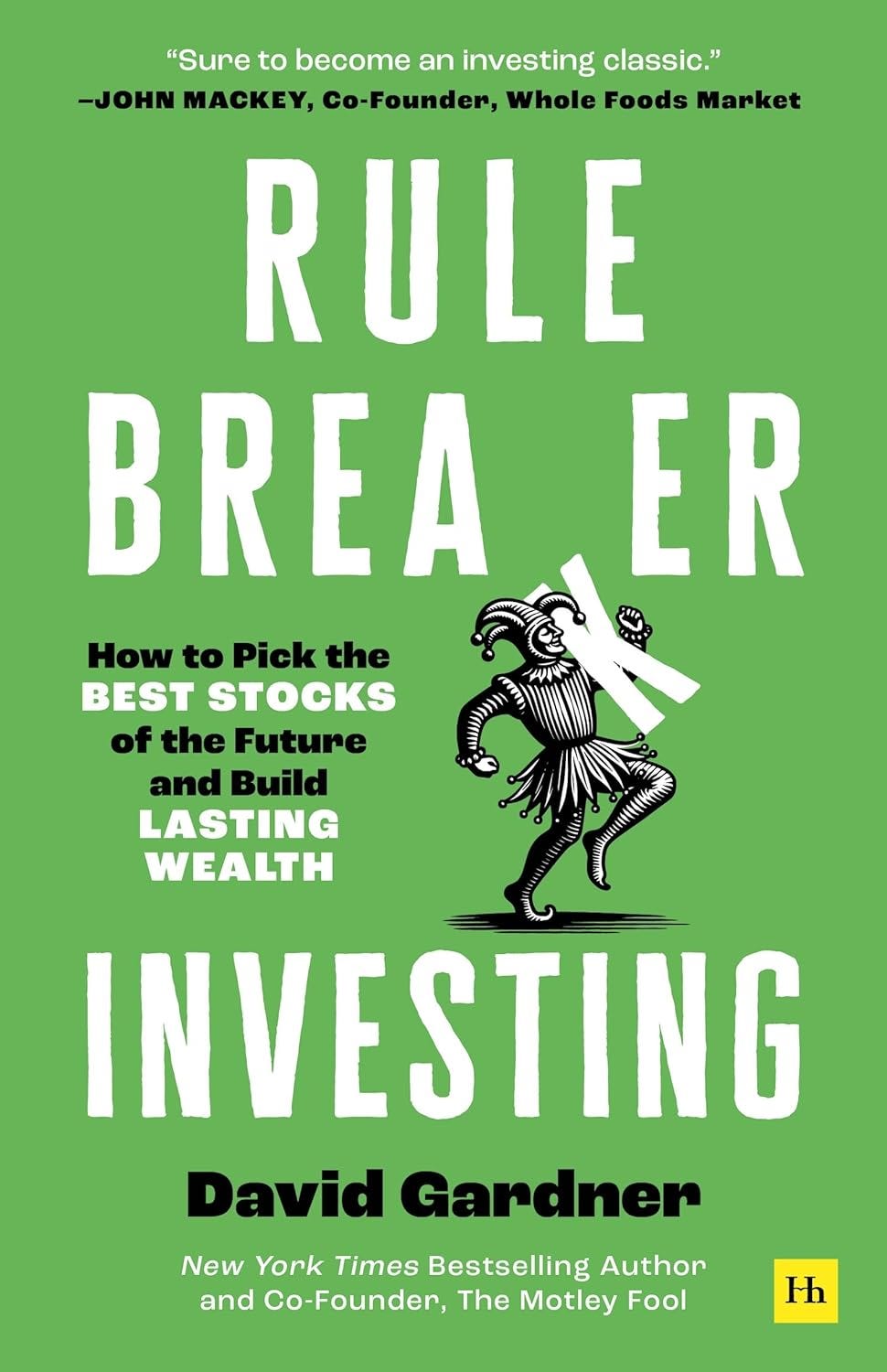
I had the distinct privilege early in my career to work for and learn from David Gardner at The Motley Fool. If you’ve ever met David or listened to one of his interviews or podcasts, you’ll know that he has such boundless energy and enthusiasm to help people become better investors that you can’t help but learn from him.
David and I have different approaches to investing, but he regularly challenges me to rethink my assumptions. Quite honestly, you should listen to anyone who bought and held Amazon and NVIDIA stock for decades. There’s a great story David tells about how he met Jeff Bezos and told him that he has the second-lowest cost basis in Amazon stock after Bezos.
One of my favorite David Gardner lines is to “make your portfolio reflect the best vision for our future.” The longer I invest, the more I think this is true. Looking back on our investing careers years from now, our biggest winners won’t be $1 bills that we paid 50 cents for, only to sell it when the market eventually priced it at $1. It’ll be the $1 bills that turned into $5, $10, $50 and so on. Companies that are creating long-term value by building useful products, innovating, and solving problems.
What I Learned About Investing From Darwin - Pulak Prasad
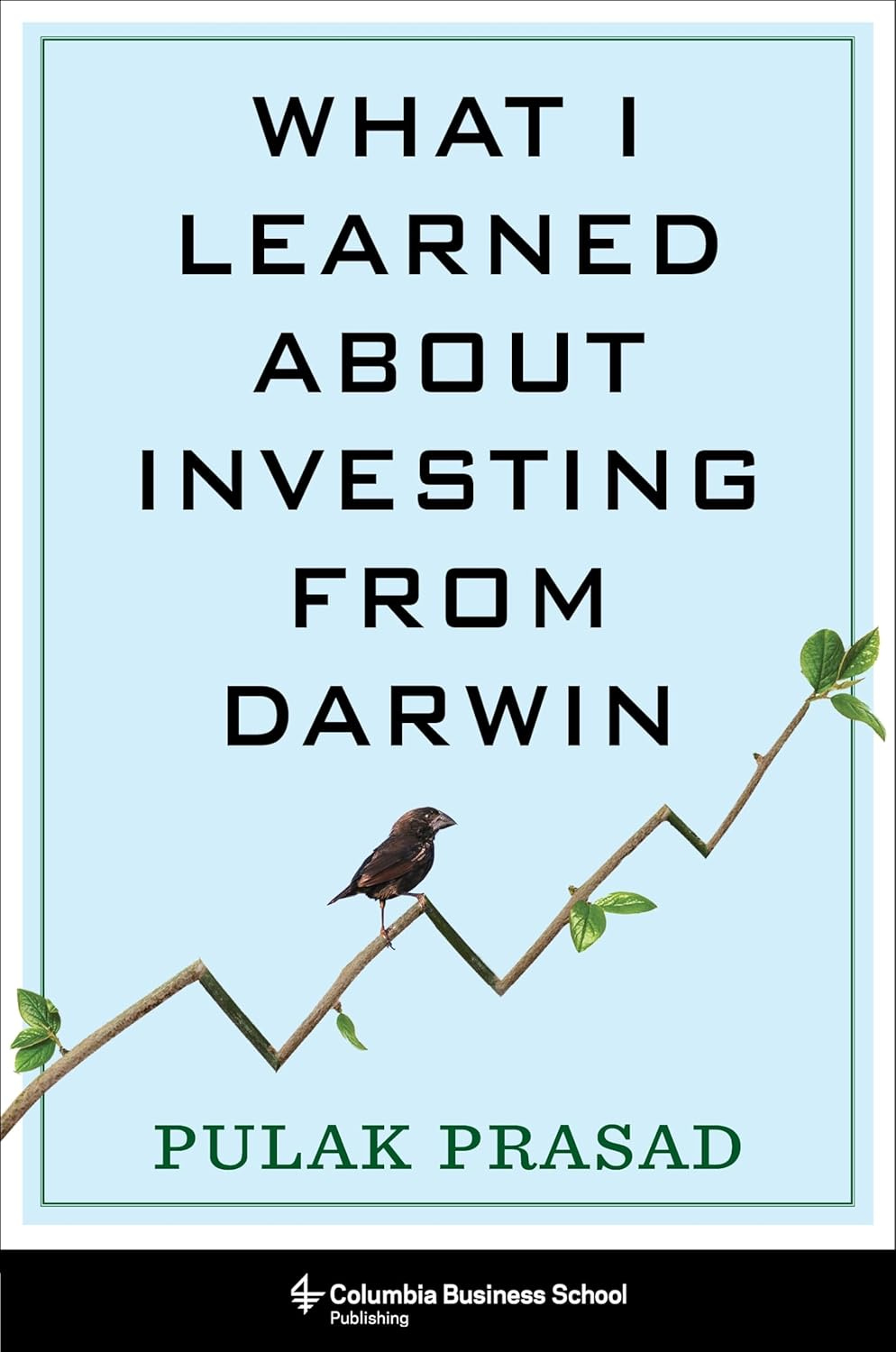
My friend, Vikram, sent me this book earlier in the year and I both read the book and listened to the audiobook on Spotify on my commute to work. There’s a lot of great material and I wanted to reinforce the lessons by learning them through different media.
The book applies some of Darwin’s key findings about natural selection and evolutionary biology to evaluating companies. It’s divided into three sections: Avoid Big Risks, Buy High Quality at a Fair Price, and Don’t Be Lazy - Be Very Lazy.
In the spirit of the late Charlie Munger, I find it useful to consider different mental models - in this case, biology - to better understand businesses and recognize risks and opportunities. For example, Prasad discusses the importance of “robustness” in nature and business and why robustness includes a willingness to evolve. Species and companies with high robustness and low evolvability do not survive for long.
While Prasad’s approach was already similar to mine, the book added some arrows to my quiver for understanding and sorting businesses. For instance, it added a new lens for thinking about buying or owning cyclical companies through inevitable downswings. The more robust the company - i.e. economic moat, low/no debt, fragmented customer base, etc. - the more likely the company is to emerge from the downswing stronger than before and the more willing I should be to look beyond short term pressures.
What investing books are you recommending this year? Please let me know in the comments below.
Stay patient, stay focused.
Todd
Todd Wenning is the founder of KNA Capital Management, LLC, an Ohio-registered investment advisor that manages a concentrated equity strategy and provides other investment-related services.
At the time of publication, Todd, his immediate family, and/or KNA Capital Management, LLC or its clients may own shares of companies previously profiled at Flyover Stocks.
Please see important disclaimers.
Agree-Prasad's book was one of the best I've read in several years, not just this one.